Decoding Keycap Profiles and Plastics
Keycaps are the direct physical interface between you and your switches. Their shape, height, and chemical composition drastically alter how a board feels under the fingers and resonates in a room.
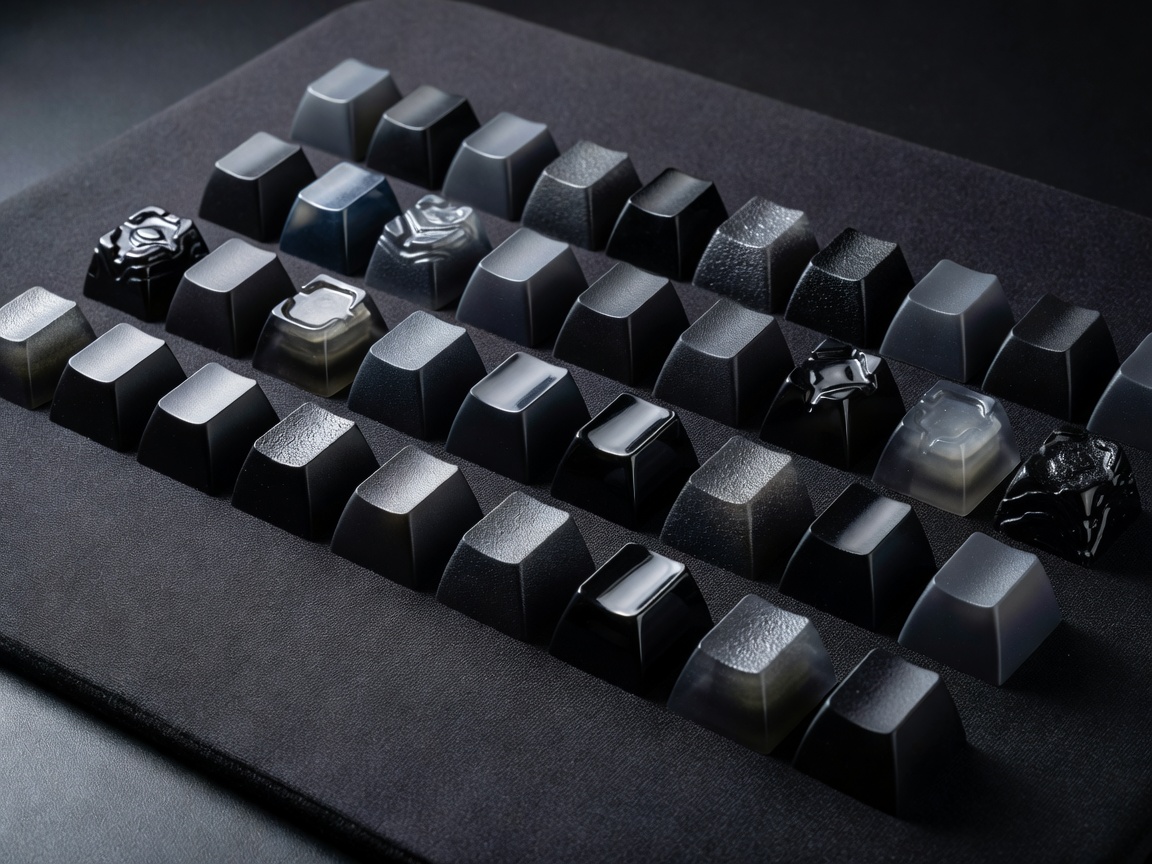
Sculpted vs. Uniform Profiles
The term "profile" refers to the three-dimensional shape and height of the keycaps across the rows of a keyboard. Profiles generally fall into two broad categories: Sculpted and Uniform.
Sculpted Profiles are designed so that each row (from the number row down to the spacebar row) has a unique angle and height. This curvature is designed to reduce the distance fingers must travel to hit peripheral keys, hugging the natural resting position of the hands.
- Cherry Profile: The gold standard in the custom community. It is a low-profile, subtly sculpted design that provides an incredibly comfortable, neutral typing angle. It yields a distinct, snappy acoustic signature.
- OEM Profile: Similar to Cherry but slightly taller, OEM is the default sculpted profile found on almost all pre-built gaming and mainstream mechanical keyboards.
- SA Profile: A towering, retro-styled profile that boasts high spherical tops. SA caps create a massive internal hollow space, acting like an acoustic echo chamber that produces deep, booming typing sounds. Their steep height usually mandates the use of a wrist rest.
- MT3 Profile: Heavily sculpted with deep dish spherical tops that firmly cradle the fingertips. It aggressively cups the fingers, delivering unmatched tactile feedback for touch typists.
Uniform Profiles, on the other hand, maintain the exact same height and shape across every single row. They are entirely flat from top to bottom.
- DSA Profile: A low, flat, spherical profile. Because every key is identical in shape, DSA is highly versatile, allowing users to swap keys around easily for alternate layouts like Dvorak or Colemak without introducing jagged height mismatches.
- XDA Profile: Similar to DSA but with a slightly wider top surface area, offering a more forgiving target for fast, inaccurate typists.
The Plastics: ABS versus PBT
The raw material injected into the keycap molds determines texture, durability, and color vibrancy. The two undisputed giants of keycap plastics are ABS and PBT.
ABS (Acrylonitrile Butadiene Styrene)
ABS is a softer plastic. While cheaper, thin ABS is often derided in low-end keyboards, thick, premium ABS (such as the sets produced by GMK) is highly coveted. The primary advantage of ABS is its ability to produce incredibly sharp, vivid, and saturated colors that simply cannot be achieved with other plastics. However, due to its softer nature, ABS is prone to "shining"—a phenomenon where the matte texture of the keycap is slowly polished away by the oils and friction of human fingertips, resulting in a glossy, slick surface over heavily used keys.
PBT (Polybutylene Terephthalate)
PBT is a much denser, harder, and more brittle plastic. It naturally features a slightly rough, sandy texture that resists shining for years, if not decades. It also withstands higher temperatures and UV exposure without yellowing. However, PBT is notoriously difficult to manufacture; during the cooling phase in the mold, long keys (like spacebars) have a tendency to shrink and warp. Additionally, the color palette of PBT is generally restricted to softer, more pastel tones compared to the striking vibrance of high-end ABS.
Manufacturing Methods
How the legend (the letter or symbol) is applied to the keycap dictates its lifespan.
Double-shot injection involves molding two separate pieces of plastic—one for the outer shell and one for the inner legend—and fusing them together. Because the legend runs all the way through the plastic, it can physically never wear off.
Dye-sublimation (Dye-sub) uses intense heat to sink dye deep into the plastic itself. This is almost exclusively used on PBT caps because ABS would melt at the required temperatures. It is highly durable and prevents you from feeling a printed bump under your finger, though it generally restricts legends to being darker than the base plastic color.